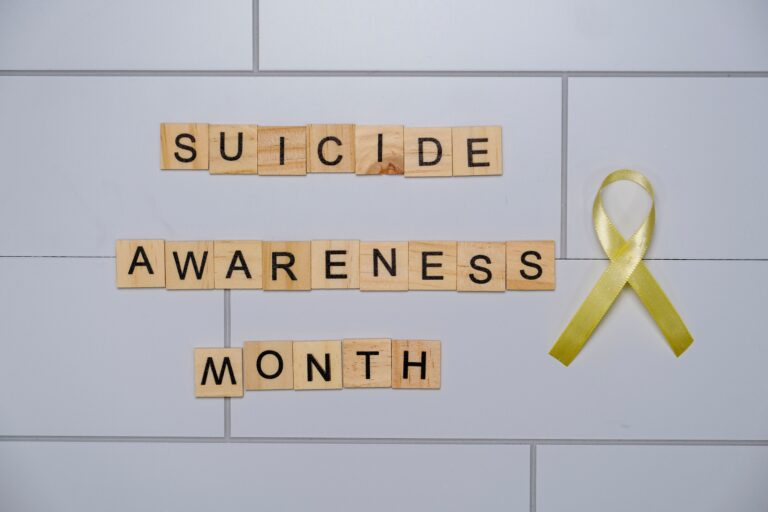
What If We Talked About Suicide Differently?

Lorem ipsum dolor sit amet, consectetur adipiscing elit. Ut elit tellus, luctus nec ullamcorper mattis, pulvinar dapibus leo.

Every September, World Suicide Prevention Day arrives on the 10th quietly for most people. For those of us working in mental health, it lands a little differently. World Suicide Prevention Day isn’t really about a single day at all, it’s an invitation to look honestly at how we, as a society, talk (or don’t talk) about suicide, and what might change if we did it better.
I want to write about this not as a set of statistics, but as something I sit with routinely in my work locally in Hemel Hempstead, St Albans and Watford an online across the UK. Somatic work has taught me that most of what needs saying arrives in the body long before it arrives in words: a sense of overwhelming fear, that heaviness on the chest, a sentence that starts and stalls. And I think that’s true of this conversation as a whole, not just for the people I work with, but for all of us. We know, somewhere in our bodies, when something is wrong. What we often lack is permission, language, or practice in saying so.
Changing the Narrative
The theme running through this year’s World Suicide Prevention Day is “changing the narrative on suicide.” I like this phrasing because it doesn’t ask for grand gestures. It asks for a shift, from silence to openness, from fear to curiosity, from judgement to compassion.
For a long time, the narrative around suicide has been shaped by discomfort. We’ve been taught, often without realising it, that it’s safer not to mention it, that asking might somehow plant the idea, or that it’s not our place to ask. In my experience, the opposite tends to be true. Naming something difficult rarely makes it worse. What tends to make things worse is the loneliness of carrying it unspoken.
Changing the narrative starts small. It might be choosing steadier, less sensational language when the subject comes up. It might be simply staying present in the room, literally or metaphorically, when someone mentions they’re struggling, rather than changing the subject to protect our own discomfort.
Why the Body Matters in This Conversation
Working somatically has shown me that distress doesn’t always come out as a clear statement. Sometimes it shows up as exhaustion that won’t lift, a restlessness that has nowhere to go, or a stillness that feels heavier than it should. People often tell me that once we slow down together, they realise just how much they’d been pushing through without noticing. Their mind had gotten used to coping, but their body had been struggling the whole time.
This is part of why I think stigma survives so well: it thrives in the gap between what the body knows and what we feel able to say out loud. Part of my work and part of what I’d love more people to feel able to do outside the therapy room too, is helping to close that gap. Not by forcing words, but by making space for them to arrive in their own time.
Starting the Conversation
People often ask me how to check in on someone they’re worried about, and worry they’ll say the wrong thing. In my experience, there isn’t a perfect script, but there are a few things that tend to help:
Ask directly, gently. Something as simple as “I’ve noticed you don’t seem yourself lately, how are you really doing?” opens a door without forcing anyone through it.
Resist the urge to fix. Most people aren’t looking for solutions in that first moment. They’re looking for someone willing to stay present with them.
Follow their pace. Silence isn’t failure. Sometimes the most supportive thing is simply not looking away.
Take it seriously if someone says they’re struggling with thoughts of suicide. You don’t need the perfect response, you need to listen, stay calm, and help them find further support.
None of this requires clinical training. It requires willingness, and a bit of practice at tolerating a conversation that might feel uncomfortable.
If You’re the One Struggling
If any of this is landing because you’re the one finding things hard right now, I want to say clearly: you don’t have to carry it alone, and reaching out is not a burden on anyone. Samaritans are there day or night, for anyone who needs to talk, whatever is going on. If you find calling difficult, Shout offers a free, confidential text service. And if you want to understand more about the support available more broadly, the NHS’s guidance on suicidal thoughts is a clear, compassionate place to start.
Beside You Every Step
This day, for me, isn’t about grim statistics or performative awareness. It’s a reminder to keep the conversation open, in my practice, in my community, and in the ordinary exchanges we have with the people around us. Changing the narrative doesn’t happen in one dramatic moment. It happens in the small, steady choices to ask, to listen, and to stay.
If you’re struggling, or you’re worried about someone who might be, you don’t have to work it out alone. I offer a calm, non-judgemental space to help you find your footing again.